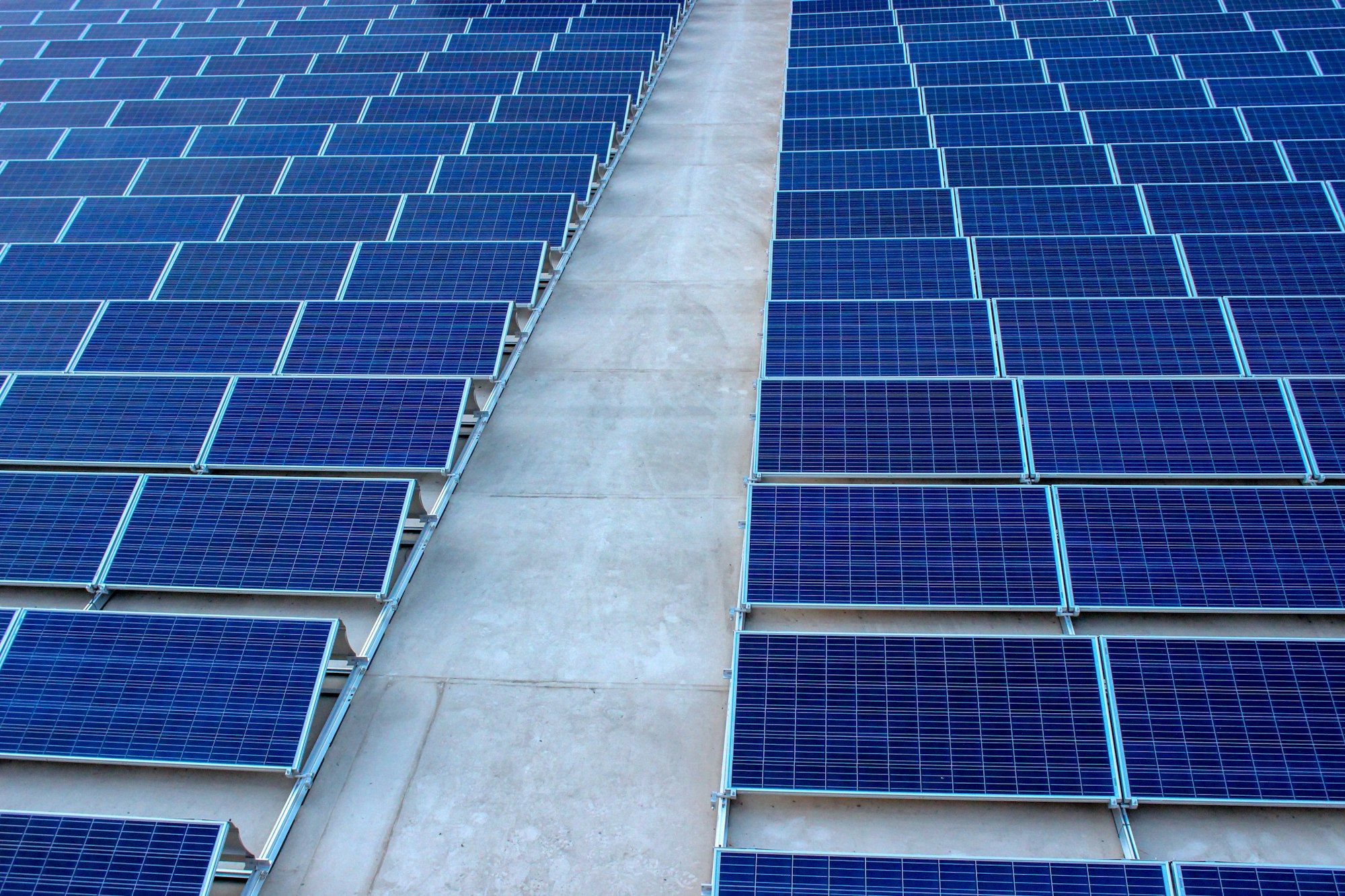
Commercial solar pays back fastest when your business uses most of the power while the sun is up. To get the simple payback, divide the installed cost by the yearly saving. The saving is the solar you use on site times your variable price per kWh, plus a smaller credit for anything you export. Then compare the monthly saving with a loan repayment. If the saving is bigger, the panels pay their own way from day one.
The sums take about 20 minutes, using your last 12 power bills and an installer’s quote. This guide walks through them, using a made-up example business.
Why are so many NZ businesses looking at solar right now?
Power bills keep climbing. The Electricity Authority reported in August 2026 that prices for households and small businesses rose 6.8% on average in the first half of 2026, after 8.0% in 2025. Small businesses whose prices changed saw their bills go up 7.2%.
The detail matters for solar. The Authority found “higher lines charges were the biggest driver”, making up 54% of the increase. Solar cuts the energy you buy, but it does nothing to fixed daily charges or capacity-based lines charges. So if a big share of your bill is fixed, solar will save less than the headline price rise suggests.
What are the four numbers that decide payback?
| Number | Where to find it | Why it matters |
|---|---|---|
| Installed cost | Installer quote, ex GST | EECA’s rough guide is $1,500–2,000 per kW. Bigger systems cost less per kW |
| Yearly generation | Installer’s yield estimate for your roof and region | Depends on location, roof angle and shading |
| Self-consumption share | Your half-hourly meter data compared with the solar profile | The biggest swing factor. A café open seven days beats an office shut at weekends |
| Your variable price per kWh | Your bill, ex GST (ignore the fixed daily charges) | That’s what each kWh of solar you use saves you |
Add one more: the export buyback rate from your retailer. EECA’s guidance says businesses with “high daytime electricity use” get the best returns, because buyback rates are usually lower than the price you pay for grid power.
Ask your retailer for 12 months of half-hourly consumption data from your smart meter. A good installer will lay the expected solar output over it, which tells you how much you’ll actually use yourself. Don’t accept a quote that just multiplies total generation by your full price.
How do you calculate solar payback for a business?
Yearly saving = (kWh used on site × variable price) + (kWh exported × buyback rate) − yearly maintenance allowance
Simple payback (years) = installed cost ex GST ÷ yearly saving
A worked example: a Nelson commercial bakery
An illustrative example, not a real business. Every input below is an assumption. Use your own bills and quotes.
A bakery runs ovens, mixers and chillers from 4am to mid-afternoon, six days a week. It’s GST-registered, operates as a company and owns its building.
- System: 50 kW, quoted at $85,000 ex GST ($1,700 per kW, inside EECA’s rough range).
- Generation: the installer estimates 1,300 kWh per kW a year, so 65,000 kWh.
- Self-consumption: 85% used on site (55,250 kWh), 15% exported (9,750 kWh).
- Variable price: 24 cents per kWh ex GST, taken from the bakery’s bills.
- Buyback: 10 cents per kWh.
- Maintenance allowance: $800 a year for cleaning and checks.
| Amount | |
|---|---|
| Solar used on site: 55,250 kWh × $0.24 | $13,260 |
| Exported: 9,750 kWh × $0.10 | $975 |
| Less maintenance allowance | −$800 |
| Yearly saving | $13,435 |
| Simple payback: $85,000 ÷ $13,435 | about 6.3 years |
That’s in the same range as the EECA case study of a 60 kW Auckland office with a 7-year payback. EECA expects panels to last 30+ years, with output slowly declining each year (EECA assumes less than one percent annually). It also suggests budgeting for an inverter replacement at around 15 years. So after payback, the bakery should have well over 15 years of cheap daytime power left.
What moves the answer?
Here’s the same bakery with one input changed at a time:
| Scenario | Yearly saving | Payback |
|---|---|---|
| Base case | $13,435 | 6.3 years |
| Only 60% used on site (say, closed weekends) | $11,160 | 7.6 years |
| Installed cost $2,000 per kW ($100,000) | $13,435 | 7.4 years |
| Variable price 10% higher | $14,761 | 5.8 years |
Self-consumption and price move the answer as much as the quote does. EECA’s own testing found that cutting the capital cost by 20% lifted the internal rate of return by 35%, so get at least two quotes.
How do tax and GST change the numbers?
GST. The $85,000 quote is $97,750 including GST. A GST-registered business can generally claim the $12,750 back in its next return. On installation day, though, the bakery needs the full GST-inclusive amount. If you file two-monthly or six-monthly, that refund may take a while to arrive. Our guide to GST filing periods and cash planning shows how to time it.
Investment Boost. Inland Revenue’s Investment Boost rules cover new depreciable assets and improvements to commercial and industrial buildings first available for use on or after 22 May 2025. Residential buildings are excluded. If the bakery’s system qualifies, it can deduct 20% ($17,000) up front. At the 28% company rate, that’s $4,760 less tax in the first year. The other $68,000 is depreciated at Inland Revenue’s rate for the asset (claiming depreciation explains how).
Income tax on the saving. A lower power bill means slightly higher taxable profit, so the after-tax saving is about 72% of the pre-tax figure for a company. But the system’s cost is deductible over its life too. Tax shrinks both sides of the payback sum by roughly the same proportion, and Investment Boost brings part of the deduction forward. In practice, pre-tax simple payback is a fair first test. Your accountant can refine it.
For more on how up-front deductions interact with timing, see our depreciation and Investment Boost guide.
Does borrowing for solar still stack up?
This is the test most owners actually care about. Convert the yearly saving into a monthly figure and compare it with the repayment:
Monthly saving = $13,435 ÷ 12 = about $1,120
If the bakery borrows $85,000 and the repayment comes to less than about $1,120 a month, the panels are cash-positive from the first month. The power bill falls by more than the loan costs. When the loan is paid off, the whole saving drops to the bottom line. If the repayment is higher, the system can still be worth it, but it costs cash for the first few years. You need to know you can carry that.
The GST is a separate, short-term gap. Fund it for a month or two, or from working capital, until the refund lands.
If those numbers are starting to look good, see what funding you could qualify for. It takes about a minute and won’t touch your credit file.
Buy, borrow or sign a power purchase agreement?
| Pay cash | Borrow (business loan) | Power purchase agreement | |
|---|---|---|---|
| Upfront cost | Full price | Little or none | None |
| Who owns the panels | You | You | The provider |
| Who keeps the saving | All of it | All of it, less repayments until the loan’s paid | You get a discount on power, and the provider keeps the rest |
| Investment Boost and depreciation | Yours | Yours | The provider’s |
| Effect on working capital | Big hit | Small | None |
| Long-term value | Highest | High once repaid | Lower, but no capital tied up |
EECA’s case studies include a hotel that reported 30% cheaper electricity through a PPA. That’s a real saving with no capital tied up. Owning the system yourself keeps 100% of the saving instead. Our lease vs buy vs borrow guide goes through the same trade-offs for other equipment.
Five checks before you sign a solar quote
- Get half-hourly data, not just bills. Self-consumption is the number most likely to be wrong in a quote.
- Check the roof. EECA flags shading, roof condition and structural loading, especially in high seismic areas. Replacing the roof two years after installing panels is an expensive double-up.
- Ask your lines company about export limits before you size the system. Your connection may cap what you can send back to the grid.
- If you lease, get the landlord’s consent in writing, including who owns the panels at the end of the lease.
- Run your break-even numbers with and without the repayment. Our break-even guide shows how fixed costs move it, and the cash flow gap calculator helps map the install month.
Turning a lower power bill into a funded plan
Solar is one of the few business purchases that can cut costs from the month it’s switched on. The hard part is usually finding $90k or $100k for something that pays back over years, not months. That’s what business funding is for.
Loanster can help fund a solar system as equipment funding. It can be secured on NZ property from $20,000 up to $1m, or unsecured based on your turnover and bank statements if you’ve usually been trading six months or more.
Here’s how it works:
- About 60 seconds to enquire. Asking costs nothing, and your credit file isn’t touched just because you enquire.
- Your details stay with us. We don’t send them to a pile of lenders, so your phone won’t light up with calls from companies you’ve never heard of.
- A real person goes through your numbers: the quote, your power bills and how the repayment compares with the saving. Then they call you to talk it through.
- Please be accurate. Use your true turnover and the full GST-inclusive installation cost. That way the first option we find is the right one.