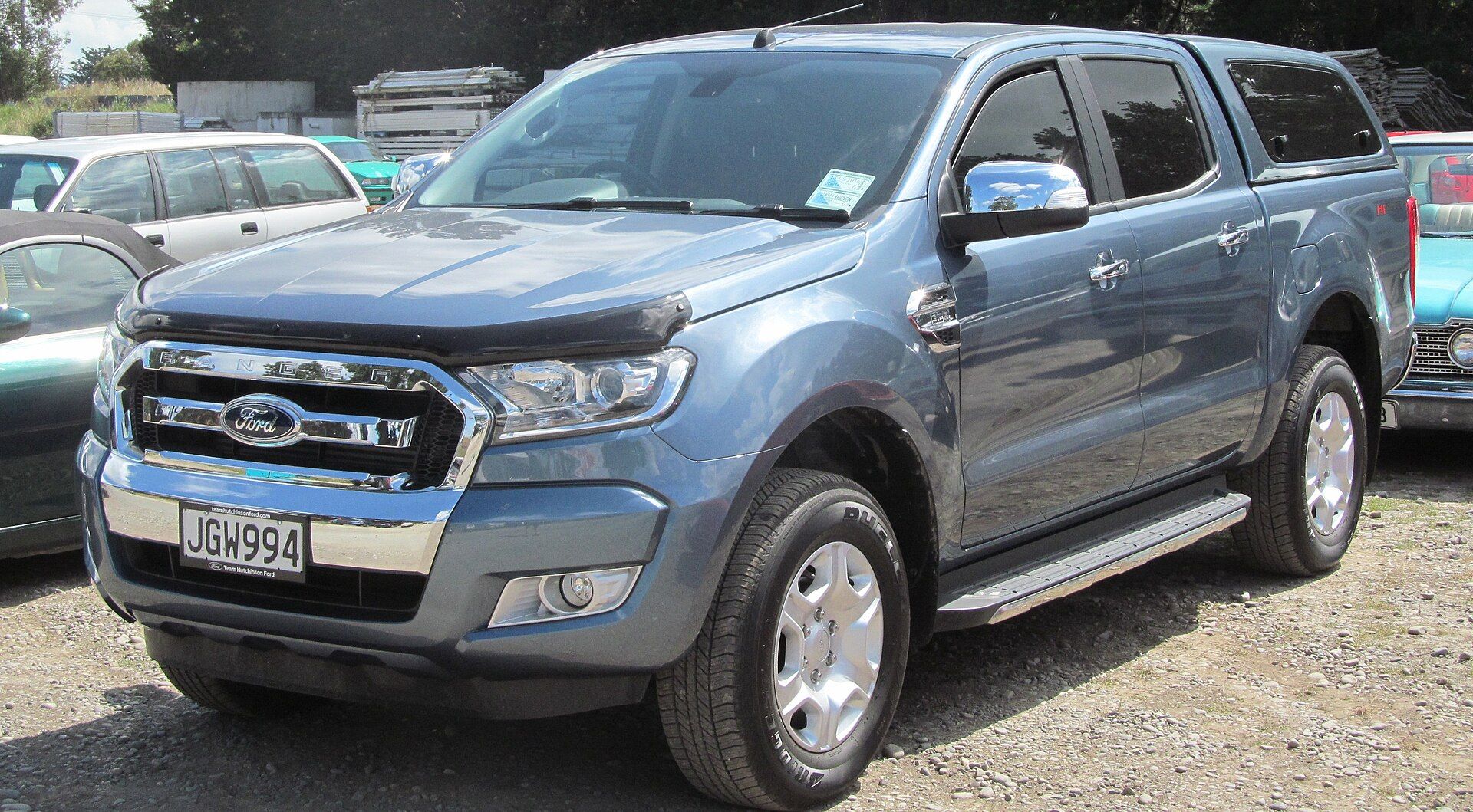
When you trade in a work ute, the dealer’s figure isn’t what lands in your pocket. If the ute sells for more than its adjusted tax value, Inland Revenue taxes the difference as depreciation recovery income, up to the depreciation you’ve claimed. If you’re GST-registered, 3/23 of the trade-in is GST you owe. Any finance still on the old ute gets paid out first.
None of that is a reason not to upgrade. It’s a reason to do the sums before you sign, so the loan you arrange for the new ute is the right size the first time.
How does depreciation recovery work on a work ute?
Every year you own a business vehicle, you claim depreciation. Each claim lowers the ute’s adjusted tax value, which is its cost less all the depreciation (and any Investment Boost) claimed so far. Tax value and real-world value drift apart quickly. Utes hold their value well in New Zealand, while the tax value falls on a fixed schedule.
When you sell, Inland Revenue compares the two:
Depreciation recovery = sale price (capped at original cost) − adjusted tax value
- Sale price above tax value: the difference is income in the year of sale. Inland Revenue’s managing depreciation page says selling a non-pooled asset for more than its adjusted tax value “will create a profit” that you include in your return.
- Sale price below tax value: you usually have a loss on sale, which is deductible.
- Sale price above original cost: recovery stops at cost, because you can’t recover more depreciation than you claimed.
Two more rules matter for timing. You can’t claim any depreciation on the old ute in the year you sell it. And the gain or loss lands in that year’s tax return, which feeds straight into terminal tax and next year’s provisional tax.
Why does Investment Boost make the recovery bigger?
Since 22 May 2025, Investment Boost has let businesses deduct 20% of the cost of qualifying new assets up front, then depreciate the other 80% as normal. A lot of tradies and contractors used it on new utes in the second half of 2025.
It’s a genuine cash-flow win, but it’s accelerated depreciation, not extra depreciation. Inland Revenue says so plainly on its Investment Boost benefits page, and its own example shows the catch. An asset sold at the start of year three for $40,000 has a tax value of $40,000 without Investment Boost, so there’s no recovery. With Investment Boost the tax value is $32,000, so $8,000 comes back as income.
So if you bought a new ute in 2025, claimed the boost and now want to swap it out, expect the recovery to be noticeably higher than it would have been a few years ago.
A worked example: swapping a 2025 ute in October 2026
An illustrative example, not a real business. The 30% diminishing value rate is an assumption. Check the rate that applies to your vehicle with your accountant.
A Waikato electrical company with a 31 March balance date:
- Bought a new double-cab ute on 1 July 2025 for $60,000 ex GST and claimed Investment Boost.
- Used it 100% for the business (it’s a company, so any private use is an FBT question rather than an apportionment one).
- Is trading it in this month, October 2026, for $52,900 including GST, which is $46,000 ex GST.
Step 1: find the adjusted tax value
| 2025–26 income year | With Investment Boost | Without |
|---|---|---|
| Cost | $60,000 | $60,000 |
| Investment Boost (20%) | −$12,000 | — |
| Depreciation, 9 months at 30% DV | −$10,800 (on $48,000) | −$13,500 (on $60,000) |
| Adjusted tax value at 31 March 2026 | $37,200 | $46,500 |
No depreciation is claimed for 2026–27, because that’s the year of sale.
Step 2: work out the recovery
- With Investment Boost: $46,000 − $37,200 = $8,800 of depreciation recovery income. At the 28% company tax rate, that’s $2,464 of tax.
- Without it: $46,000 − $46,500 = a $500 loss, which saves $140 of tax.
The difference is $9,300 of income, exactly the extra deductions Investment Boost gave in the first year ($22,800 against $13,500). The company had the cash benefit of those deductions a year early, and now it’s evening out. That’s how the scheme is designed, and it’s usually still a good trade. It just needs to be in the plan.
Step 3: GST on the trade-in
The trade-in is a sale by a GST-registered business, so 3/23 of $52,900, or $6,900, is output GST. To strip GST from an inclusive figure, multiply by 3/23 — see Inland Revenue’s guidance on charging GST.
Step 4: the replacement and the cash gap
The new ute is $80,000 ex GST, or $92,000 including GST. There’s also $18,000 still owing on finance over the old ute, and that has to be paid out before the dealer can take it free of the security (see our PPSR guide for why).
| Amount | |
|---|---|
| New ute, GST inclusive | $92,000 |
| Less trade-in, GST inclusive | −$52,900 |
| Plus payout of old ute finance | +$18,000 |
| Cash or funding needed at settlement | $57,100 |
| GST: input $12,000 less output $6,900 | $5,100 refund in the GST return |
| Tax on depreciation recovery | $2,464 due with 2026–27 tax |
The headline “changeover price” of $39,100 is $18,000 short of what the business actually needs on the day. That’s the most common surprise we see in ute upgrades.
Step 5: the new ute’s deductions
If the new ute qualifies for Investment Boost (it must be new, or new to New Zealand, and not previously used here), the company can deduct $16,000 up front plus depreciation on the remaining $64,000. At an assumed 30% for the six months from October to March, that’s $9,600, so $25,600 of deductions in 2026–27. That comfortably covers the $8,800 of recovery income in the same year. The upgrade is roughly tax-neutral this year, even though the trade-in on its own looked expensive.
If you’re sizing the funding for a changeover like this, check what you could qualify for. It takes about a minute and won’t touch your credit file.
Trade-in or private sale: which nets more?
Same tax rules, different numbers. A private sale on Trade Me often beats a dealer’s trade-in figure, and the extra price creates extra recovery income. That’s fine. For a company, each extra $1,000 of sale price still leaves about $720 after tax. Never take a lower price just to keep recovery down.
| Dealer trade-in | Private sale | |
|---|---|---|
| Price | Usually lower | Usually higher |
| Recovery income | Lower | Higher, taxed at your rate |
| GST on sale | Yes, if registered | Yes, if registered |
| Paying out existing finance | Dealer usually handles it | You arrange it before the buyer takes the ute |
| Timing | Same day as the new purchase | Can leave you a ute short for a week or two |
| Admin | Minimal | Listings, viewings, test drives |
Two traps to avoid:
- Selling cheaply to a relative or another entity you control. The disposal can be treated as happening at market value, so the tax doesn’t go away.
- Mixed-use vehicles. If you’re a sole trader or partnership claiming a business percentage, gains and losses on sale are split between business and private use in proportion.
Five checks before you sign at the dealer
- Ask your accountant for the ute’s adjusted tax value. It’s in your fixed asset register. Without it you can’t estimate the recovery.
- Get a payout figure from your current lender, valid for the settlement date.
- Separate the GST. Know the GST-exclusive trade-in figure and plan for the output tax in the right GST period. Our GST and provisional tax planner helps map when it lands.
- Confirm Investment Boost eligibility on the replacement before you count the deduction. A vehicle previously used in New Zealand won’t qualify, so check with your accountant before counting on it with an ex-demo.
- Tell your accountant before 31 March if the sale changes your income enough to affect provisional tax. Our provisional tax options guide covers how the methods react to a one-off item.
For the wider choice between owning, leasing and borrowing for vehicles, see lease vs buy vs borrow. For more on the depreciation side, see our guide to depreciation and Investment Boost timing.
What if the numbers leave a gap?
Most ute changeovers leave a gap of some kind. It might be the payout on the old finance, a GST refund that won’t arrive for weeks, or a terminal tax bill a year out. Spotting it in advance turns it into a funding decision you can plan, not a scramble on settlement day.
Business vehicle funding through Loanster can cover the cash needed at settlement, either secured on NZ property from $20,000 up to $1m or unsecured on your turnover. You can buy new or used, from a dealer, privately or at auction. If more than one vehicle or a trailer is involved, equipment funding can sit alongside it.
Getting started is simple:
- The enquiry form takes around a minute, and there’s no credit check at that first step.
- Your enquiry stays with us. It isn’t blasted out to a pile of lenders, so you won’t spend the afternoon fielding calls from finance companies you’ve never heard of.
- Someone real looks at the deal, including the trade-in, the payout, the new vehicle’s price and what it’ll earn. Then they ring you.
- Accurate figures help most. Put in your true turnover and the full settlement amount, payout included. That way the first option we line up is the one that fits.